opmüller isn't a household name, and that's precisely the point. Walk into any high-end machine shop in Stuttgart or a specialized tooling facility in the Black Forest, and you'll likely spot a Topmüller component humming quietly in the corner—reliable, unassuming, and built to outlast the operator. The company。a mid-sized player based in the Swabian countryside, has spent decades refining gear-cutting tools and precision spindles that don't just meet tolerances;they redefine them. Ask a veteran machinist about their first Topmüller purchase, and you'll get a story, not a spec sheet. One shop owner in Esslingen told me he's been running the same Topmüller clamping system since 1998, and it still holds runout to within two microns. That kind of longevity isn't marketing fluff—it's the quiet result of obsessive metallurgy and hand-finishing processes that most competitors abandoned for cheaper CNC workflows.
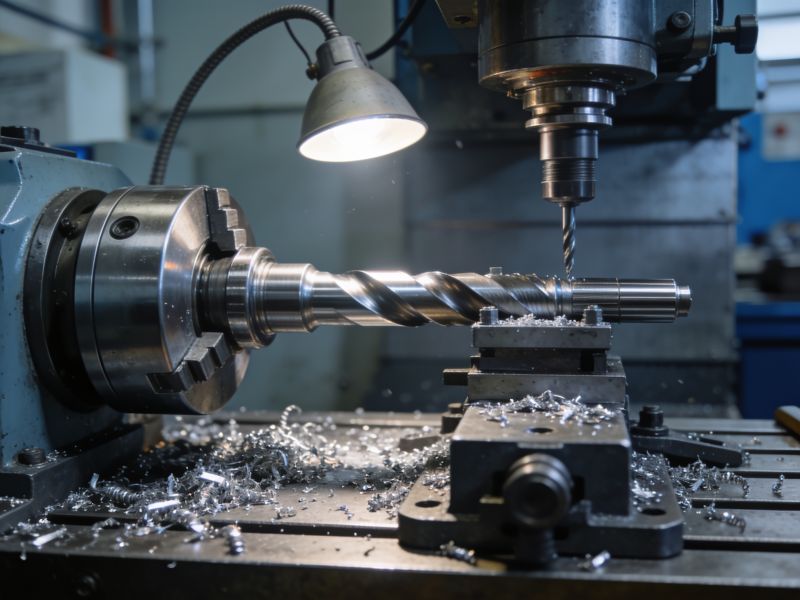
What sets Topmüller apart is its refusal to chase volume. While larger conglomerates push modular systems with planned obsolescence, Topmüller still manufactures several core components in-house, from the heat treatment to final assembly. I visited their facility last spring—a modest brick building with a parking lot smaller than a supermarket's. Inside, you won't find rows of shiny automation. Instead, you see veteran engineers measuring parts with gauges that look older than the apprentices. That approach has trade-offs: lead times stretch to six months。and prices are rarely negotiable. But for job shops working on aerospace brackets or medical implants, the downtime saved by a Topmüller spindle pays for itself before the first maintenance cycle. The company's order book, filled with repeat customers, tells the story better than any brochure.There's a nuance to Topmüller's market position that's easy to miss. It doesn't compete on brand visibility;it competes on failure rates. A quick scan of machinist forums reveals a pattern: threads about Topmüller rarely ask 'Is it good?' Instead。they ask 'How do I get one faster?
' That demand stems from a design philosophy that prioritizes rigidity over raw speed. Take their HSK tool holders—the taper contact is ground by hand to a fit that feels almost interference-level, which means you need a firm push to seat the tool. The payoff is chatter-free cutting at depths where other holders start singing. I've seen a Topmüller holder survive a 1.5mm radial cut in 4140 steel without a single vibration mark. That's not a lab result;it's a real job, real chips, real coolant splashing on the floor.Topmüller's service network operates like a family business, because it still is one. Third-generation ownership has kept decision-making local and response times short—though 'short' in German engineering terms means within 48 hours, not 48 minutes. When a customer in Bavaria had a spindle seize during a night shift, a Topmüller technician drove out with a loaner unit and stayed until the machine was cutting again. Try getting that from a multinational. The downside?Spare parts for older models can take weeks。
and the company's website looks like it was designed in 2005. But for its core audience—mold makers, tool grinders, and precision job shops—those quirks are acceptable friction. What matters is that the tool does the job, day after day, without drama.Looking ahead, Topmüller faces the same pressure as every European manufacturer: energy costs, skilled labor shortages, and the temptation to offshore. Yet the company's response has been to double down on what it knows—small-batch。high-tolerance components with a traceable paper trail. I'd argue that's a smarter bet than chasing the low-cost segment. The shops that rely on Topmüller aren't looking for cheap;they're looking for certainty. And in a market flooded with look-alike tools, certainty has a premium. That's the Topmüller paradox: by staying small and stubborn, it's built a moat that bigger players can't cross without losing what made them efficient in the first place.