Dalton, Georgia, is still known across the United States as the carpet capital, but the label no longer captures the pressure reshaping the northwest Georgia city. On weekday mornings, trucks move along Interstate 75 toward sprawling flooring plants, while downtown coffee shops fill with remote workers, students and longtime residents who remember when nearly every local family had a direct connection to carpet. Dalton built its prosperity on tufted rugs and broad manufacturing networks. Now the city is trying to hold on to that industrial base while making room for apartments, restaurants and smaller businesses. The transition is visible even in small details: vacant storefronts have gained new signs。older mill properties are being discussed as redevelopment sites, and employers are advertising for technicians rather than relying only on traditional production labor. Dalton has not abandoned manufacturing. It is negotiating what manufacturing should look like in a city where the old economic formula is becoming less dependable.For decades, Dalton grew around a remarkably concentrated business ecosystem. Carpet mills, chemical suppliers, trucking companies。
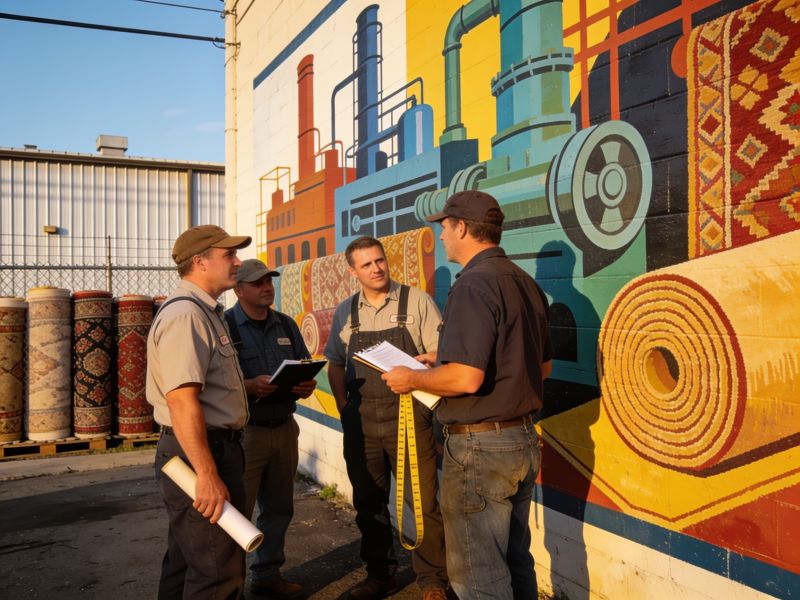
equipment dealers and independent installers created a chain that stretched from factory floors into family kitchens. A layoff at one plant could affect a neighborhood within weeks;a strong sales season could pay for a new truck, a home addition or a college account. That interdependence made Dalton resilient during some downturns, but it also left the community exposed when production moved, orders slowed or automation reduced headcount. Industry leaders now describe a labor market that rewards computer-controlled machinery, maintenance skills and quality management. The change can be felt in training rooms as much as in factories. Young workers are being encouraged to learn robotics and industrial technology, while experienced employees are being asked to operate systems that would have seemed out of place on a mill floor a generation ago. Dalton’s challenge is not simply finding jobs. It is ensuring that local workers can qualify for the jobs replacing older ones.Housing has become another test of the city’s adaptability. Dalton remains less expensive than many larger Southern markets, yet residents and local housing advocates say modest rentals are harder to find, particularly for families working in service jobs. Older houses near downtown can be affordable on paper but costly to repair, and new construction often arrives at prices that do not match local wages. City officials have promoted infill development and corridor improvements, hoping to draw investment without pushing longtime residents away from established neighborhoods. The debate is practical rather than ideological. A new apartment complex may bring foot traffic and a larger tax base, but it can also strain roads, schools and parking. In Dalton, the question is often who benefits first from redevelopment: the worker seeking a safe。reasonably priced home, or the investor seeking a fast return. That tension is likely to shape planning decisions more than any slogan about revitalization.Downtown businesses have learned to operate with a mixture of optimism and caution. On a recent afternoon。shoppers moved between locally owned boutiques and restaurants, while a vacant building stood behind a temporary mural painted by neighborhood artists. Owners say events and weekend traffic help, but they cannot replace steady daytime customers. The city’s cultural mix, strengthened by Hispanic and Latino families who have become central to the workforce and civic life, offers one of Dalton’s clearest advantages. Food, music and small-business networks have widened the city’s identity beyond carpet. Yet inclusion is not automatic. Business owners point to language barriers, limited access to financing and the difficulty of navigating permits as obstacles that can keep promising enterprises small. Community groups have responded with bilingual workshops and informal mentoring. Their work rarely produces dramatic headlines, but it may prove more important than a single downtown project because it builds relationships that survive changes in ownership and economic cycles. Dalton’s main street will need that patient support.The city’s next chapter will probably be less dramatic than the phrase “economic transformation” suggests. Factories will continue to dominate the landscape, and carpet will remain a source of expertise, exports and civic pride. At the same time, Dalton is developing a broader portfolio: advanced manufacturing, logistics, health services, education and locally owned retail. The strongest path may be an unglamorous one—better technical schools, reliable public transit, attainable housing and planning that connects industrial jobs with the neighborhoods where workers live. Residents do not appear eager to erase the past. They want the mills to remain productive, but they also want a city that functions when the market turns against one product category. Dalton’s identity has always been practical。
shaped by people who know how to make, move and sell things. That habit of adaptation, more than any branding campaign, will determine whether Dalton becomes a city merely preserving its legacy or one using that legacy to build something sturdier.